


If you’re a content writer in 2026 and you’re not using AI tools yet, you’re essentially running a marathon in dress shoes. Everyone around you has upgraded and the gap is only getting wider. But if you’re already using AI and wondering whether you’re using the right ones, you’re in exactly the right place.
The landscape has changed dramatically. The best AI tools available in 2026 aren’t just faster typewriters anymore. They understand context, maintain brand voice across thousands of pieces, research topics in real time, optimize for search engines automatically, and even repurpose content across formats without you lifting a finger. This guide cuts through the hype and focuses on what’s actually working for content professionals right now.
Table of Contents
What’s Different About AI Writing Tools in 2026?
A lot has happened in a short time. Two years ago, AI tools were impressive novelties. Today, they’re core infrastructure for content teams at companies of every size. A few shifts stand out:
SEO and content creation have fully merged. The best platforms in 2026 handle keyword research, content briefs, drafting, and optimization inside a single workflow.
Multimodal is the new normal. The best AI tools in 2026 don’t just write they read your uploaded briefs, analyze competitor articles, process reference images, and generate content with all of that context baked in.
Real-time research is table stakes. Gone are the days of AI tools confidently making things up. Modern tools pull live data, cite sources, and fact-check as they write.
Personalization has gotten eerily good. AI tools now learn your writing style over time and adapt to match it so your content sounds like you, not like a robot.
The Best AI Tools for Content Writing in 2026
Here are the top platforms dominating the content writing space this year each earning its spot based on real-world performance, writer feedback, and capability updates through early 2026.
1. Claude by Anthropic – Best for Deep, Nuanced Long-Form Content
Claude has cemented itself as the go-to tool for writers who care deeply about quality. What makes it stand out in 2026 is its extended context window, you can feed it an entire content strategy document, a brand style guide, and five reference articles, and it will synthesize all of it into a single coherent piece that actually sounds like a human being wrote it.

Writers working on thought leadership content, in-depth industry guides, white papers, and editorial pieces consistently rank Claude among the best AI tools available. It doesn’t just generate words it reasons through arguments, anticipates counterpoints, and structures content with genuine intellectual depth. The 2026 version also includes a significantly improved memory feature, meaning it learns your preferences across sessions.
- Best for: Long-form blogs, white papers, thought leadership, editorial content
- Standout feature: Extended context, reasoning depth, and style adaptation
- Pricing: Free tier available; Claude Pro for power users
2. Google Gemini Advanced – Best for Research-Heavy Content
Google’s Gemini Advanced has become one of the most powerful best AI tools for content writers who rely heavily on research. With deep integration into Google Search, Google Docs, and real-time web data, Gemini can produce content that is both current and well-sourced without you ever leaving your writing environment.

In 2026, Gemini’s ‘Deep Research’ feature is a standout it can autonomously research a topic, evaluate multiple sources, and produce a structured content brief or full draft with inline citations. For journalists, analysts, and niche bloggers who can’t afford to publish outdated or inaccurate information, this is a genuine game-changer.
- Best for: Research-heavy articles, news-adjacent content, technical blogs
- Standout feature: Real-time Google Search integration and autonomous research mode
- Pricing: Included with Google One AI Premium ($19.99/month)
3. Jasper AI – Best for Content Teams and Brand Consistency
Jasper has evolved significantly since its early days as a template-heavy copywriting tool. In 2026, it’s a full content operations platform. The brand voice feature has become remarkably sophisticated you can train Jasper on your existing content, and it will replicate your tone, terminology, and style preferences across every piece your team produces.
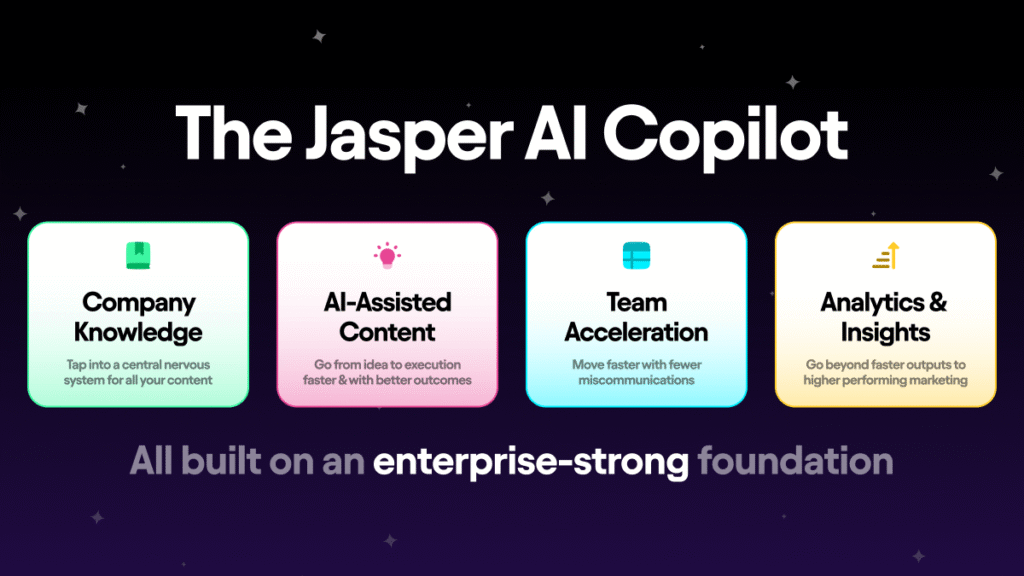
For agencies and marketing teams managing multiple clients or brand voices simultaneously, Jasper remains one of the best AI tools in the business. Its integration with SurferSEO is still rock-solid, and the 2026 update added a content repurposing suite that turns a single blog post into a full week of social content automatically.
- Best for: Marketing agencies, content teams, high-volume production
- Standout feature: Brand voice training and cross-platform content repurposing
- Pricing: Creator plan from $39/month; Teams from $99/month
4. ChatGPT (GPT-4.5 / o3) – Best for Versatility and Creative Writing
OpenAI’s ChatGPT continues to be the Swiss Army knife of AI content tools in 2026. The combination of GPT-4.5 for creative, conversational tasks and the o3 model for complex reasoning makes it the most versatile platform available. Whether you need a catchy product description, a heartfelt newsletter, a technical how-to guide, or a punchy Twitter/X thread, ChatGPT handles the range without breaking a sweat.

The Canvas feature now fully mature lets you write, edit, and refine content in a live document-style interface with AI assisting at every stage. It’s the closest thing to having a co-writer sitting next to you. For solo content creators who need to wear many hats, ChatGPT remains one of the best AI tools you can use daily.
- Best for: Creative writing, versatile content types, editing and rewriting
- Standout feature: Canvas interface + GPT-4.5 and o3 model access
- Pricing: Free (GPT-4o mini); Plus at $20/month; Pro at $200/month
5. Writesonic – Best for SEO Content at Scale
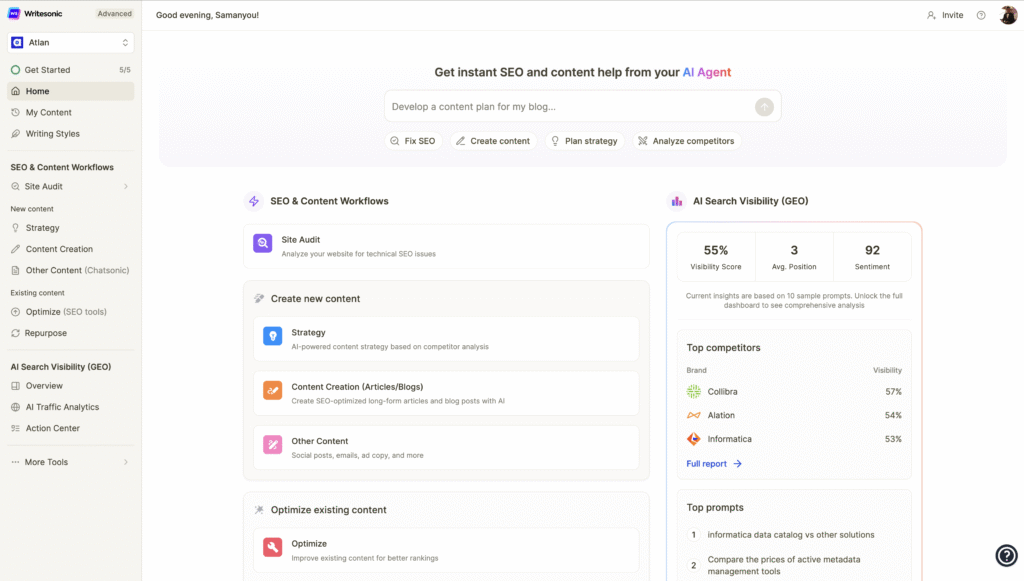
Writesonic has doubled down on its SEO identity in 2026 and it’s paid off. The platform now offers an end-to-end SEO content workflow: keyword clustering, automated content briefs, AI-generated drafts optimized around your target keywords, internal linking suggestions, and a readability score all in one place. For content marketers who live and breathe organic traffic, this is one of the best AI tools on the market.
The Chatsonic feature continues to pull real-time web data, which keeps articles accurate and up to date even for fast-moving topics. The bulk article generator is particularly popular among affiliate marketers and programmatic SEO practitioners who need to produce hundreds of pages efficiently.
- Best for: SEO blogs, affiliate sites, programmatic content, web copy
- Standout feature: Full SEO workflow from keyword to published article
- Pricing: Free plan available; paid plans starting at $16/month
6. Perplexity AI – Best for Fact-Checked, Citation-Ready Content
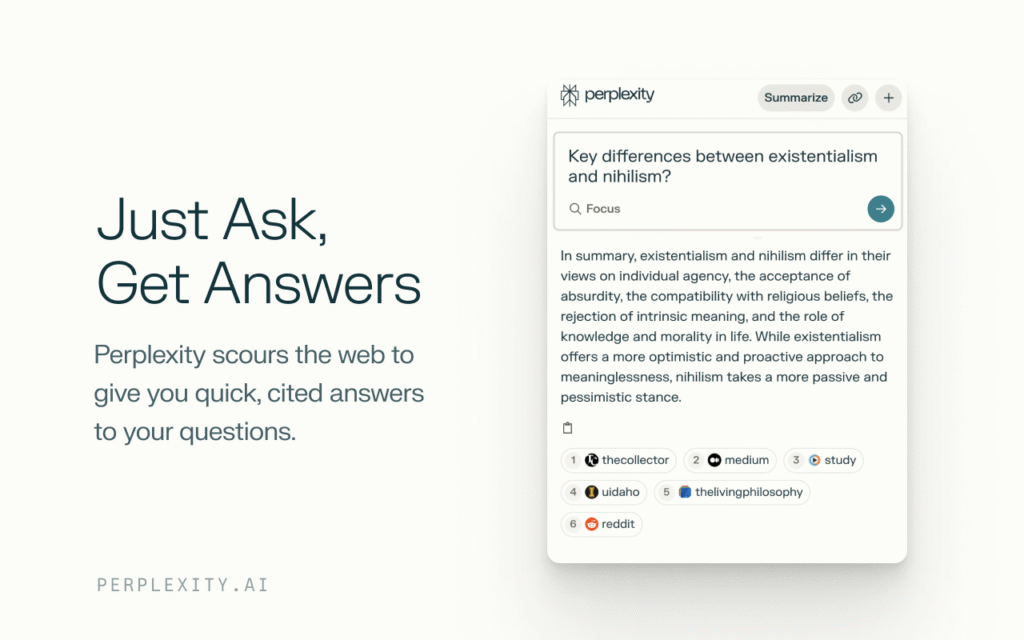
Perplexity has grown from a search tool into one of the most trusted best AI tools for content writers who prioritize accuracy above all. Every claim it makes comes with a source. Every fact is verifiable. In an era where AI hallucinations have eroded trust in generated content, Perplexity’s commitment to citations makes it invaluable for writers who publish in health, finance, law, or science fields where getting things wrong has real consequences.
- Best for: Research, fact-checking, authoritative niche content
- Standout feature: Automatic inline citations from live web sources
- Pricing: Free; Perplexity Pro at $20/month
How to Build a Smart AI Content Stack in 2026
The most effective content writers in 2026 aren’t loyal to a single tool they build a stack. Here’s how to think about it:
- Use Claude or ChatGPT for your first draft and ideation. These are your thinking partners.
- Use Writesonic or Jasper for SEO optimization and keyword integration once the draft exists.
- Use Perplexity or Gemini to fact-check claims and pull in current data where needed.
- Use a human editor as the final layer. AI does the heavy lifting; you add the irreplaceable human judgment.
Common Mistakes to Avoid When Using AI Writing Tools
Even with the best AI tools, bad habits lead to bad content. Here are the pitfalls experienced writers have learned to avoid:
- Publishing AI drafts without editing. AI output is a starting point, not a finished product. Always review, refine, and add your unique perspective.
- Over-relying on one tool. Different tools have different strengths. A diversified approach consistently produces better results.
- Ignoring brand voice. Generic prompts produce generic content. Always give your AI tool context about your brand’s tone, audience, and goals.
- Skipping fact-checking. Even the best AI tools can get details wrong. For anything that matters, verify your facts independently.
What to Expect From AI Content Tools in the Rest of 2026
The pace of development isn’t slowing down. Several trends are shaping the second half of 2026 for content writers and the AI tools they use:
- Voice and video integration. The best AI tools are rapidly adding the ability to generate video scripts, voiceovers, and even short video content directly from text briefs.
- Hyper-personalized content at scale. AI tools are getting better at generating content tailored to individual reader segments a single article can soon be dynamically adjusted for different audiences automatically.
- AI agents for full content workflows. Rather than assisting with one step at a time, AI agents can now handle entire workflows autonomously from research to publishing with minimal human input.
Final Thoughts: The Right Tool Changes Everything
Content writing in 2026 is genuinely exciting. The best AI tools available today are capable enough to handle the grunt work, smart enough to support your creative process, and sophisticated enough to maintain quality at scale. But they still need you your judgment, your voice, your understanding of what your audience actually needs.
The writers winning right now aren’t the ones who’ve handed everything over to AI. They’re the ones who’ve figured out how to collaborate with it using the best AI tools as an extension of their own abilities rather than a replacement for them. Pick the right tools, build a workflow that fits your style, and you’ll produce better content faster than you ever thought possible.
Also Read: Top 10 Inspiring Indian Entrepreneurs Success Stories
